






















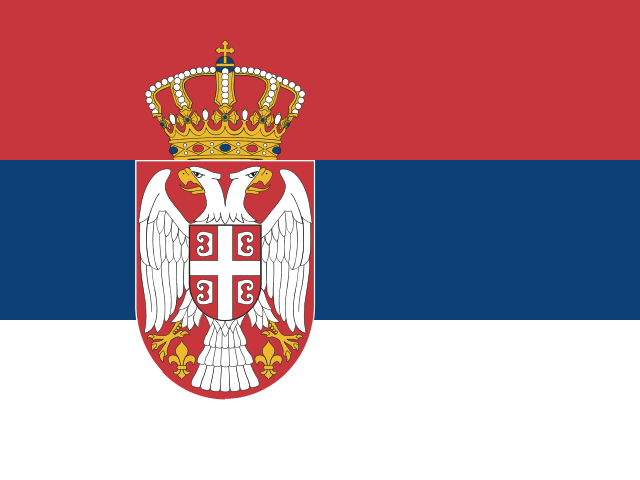



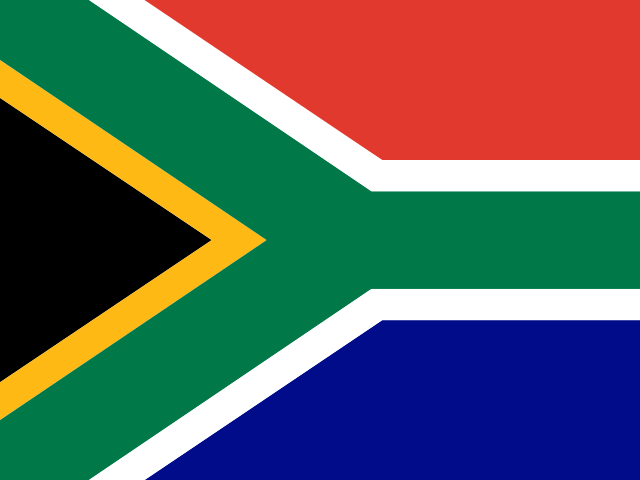

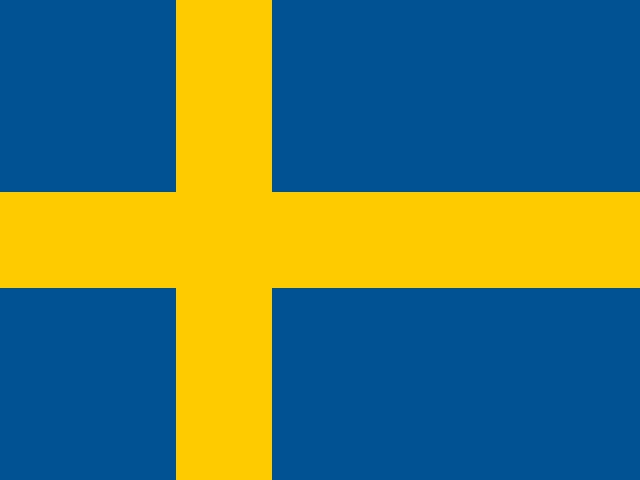



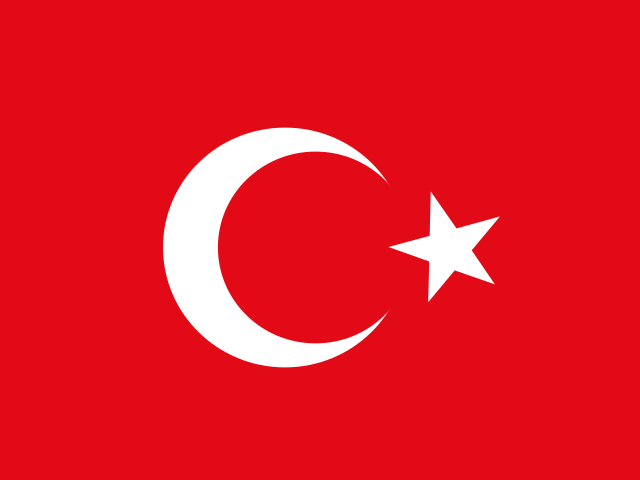



How much does Spain drink?
Alcohol consumption per adult, per year
litres of pure alcohol per adult (15+), per year
Per adult, that is roughly:
24% above the regional average
Spain
Driving in Spain? The legal alcohol limit is 0.5 g/L of blood (0.25 mg/L breath), and just 0.3 g/L for novice drivers in their first 2 years. Our BAC calculator estimates your blood alcohol and when you'll be safe to drive.
Do you fancy AI? Try our AI-powered BAC calculator.
The 0.3 g/L blood limit (0.15 mg/L breath) applies to drivers in their first 2 years after passing the test and to professional drivers of taxis, buses, coaches, lorries and transport of dangerous goods. From ~1.2 g/L blood (0.60 mg/L breath) the offence becomes a crime under Article 379 of the Penal Code.
| {{ afterLabel }} | {{ $t('unit.' + units) }} | Status |
|---|---|---|
| {{ result.time }} | {{ result.drunkenness }} |
Your estimated BAC as your body clears the alcohol
💡 Advice: drink water, eat, and avoid driving until you are well under 0.5 g/L (or 0.3 g/L if you're a novice or professional driver) and ideally fully sober.
Your Current BAC is the estimated alcohol in your blood, shown in g/L — the unit Spanish law and the DGT use — or as a percentage. Roadside checks measure breath in mg/L; 0.25 mg/L of breath corresponds to the 0.5 g/L blood limit.
The general limit is 0.5 g/L of blood (0.25 mg/L breath). It drops to 0.3 g/L for drivers in their first two years and for professionals (taxi, bus, coach, lorry, dangerous goods). From 0.60 mg/L of breath drink-driving becomes a crime under Article 379 of the Penal Code, and refusing the test is itself an offence under Article 383.
The body clears alcohol at a fairly constant 0.15 g/L an hour (about 0.015% BAC), and it cannot be hurried — a coffee, a cold shower or a meal change how you feel but not the figure itself. That is why a late Spanish dinner with wine can still leave you over 0.5 g/L the next morning.
One Spanish UBE (Unidad de Bebida Estándar) is about 10 grams of pure alcohol — a 200 ml caña of beer at 5%, a 100 ml copa of wine at 12%, or a 30 ml chupito of spirits. The Ministerio de Sanidad flags more than 2 UBE a day for men, or 1 for women, as raised risk.
The total pure alcohol (ethanol) your body has absorbed, in grams — the basis for both your UBE count and your BAC.
The table projects your BAC each hour, and with your first-drink time it maps them onto the time of day — handy for the morning after, showing the clock time you fall back under 0.5 g/L. Status icons mark which hours are safe to drive.
A line chart of your BAC coming down over the hours ahead, showing when it drops below the 0.5 g/L limit and then to zero.
A reference table linking BAC ranges to their typical effects on judgement, coordination and reaction time — impairment that starts well below the legal limit.
Quick summary estimates:
Legal limit reached in: time until your BAC falls below the Spanish 0.5 g/L limit (or 0.3 g/L for novice and professional drivers).
Sober in: time until it returns to ~0.00 g/L.
Peak BAC: the highest level reached in the session.
Five factors that determine your result
Alcohol consumption per adult, per year
litres of pure alcohol per adult (15+), per year
Per adult, that is roughly:
24% above the regional average
Road traffic deaths per 100,000 people, per year
road traffic deaths per 100,000 people, 2024
45% fewer road deaths than the regional average
Latest available year shown per country.
Spain's legal drink driving limits (blood alcohol)
Consequences of exceeding Spain's 0.5 g/L general limit (0.3 g/L novice/professional)
Practical tips for safer drinking
The limits and penalties on this page come from official government sources
Confirm the current rules directly with the responsible authorities:
Laws change — always check the latest limits and penalties with the official source before driving.
The exact formula, step by step
Your result is not a guess. It comes from the Widmark equation, the same formula forensic toxicologists use in court. Here it is, worked through with an example.
BAC = A ÷ (r × W) − (β × t)
where A = grams of pure alcohol, r = body-water factor (0.68 for men, 0.55 for women), W = weight in kg, β = elimination rate (~0.15 g/L per hour), and t = hours since your first drink.
The calculator runs this same equation on your own weight, sex, drinks and timing — the numbers above are only a worked example. Method based on E. M. P. Widmark (1932); results are an estimate, not a legal measurement.
SmartBAC has run over 17,000 calculations in recent weeks. Of every drink people log, beer is the most common by far — about 6 in 10 — ahead of spirits and then wine.
Anonymous, aggregated first-party usage data from SmartBAC, July–August 2026.
Your body removes alcohol at a fairly steady rate — roughly 0.15 g/L per hour (about one Spanish UBE per hour), and nothing reliably speeds this up. Starting from a BAC of 1.0 g/L, it would therefore take in the region of 6 to 7 hours for the alcohol to clear completely; from 1.5 g/L, closer to 10 hours.
That figure is an estimate, not a guarantee. The actual time depends on your weight, sex, metabolism, whether you have eaten, and your general health, so two people who reach the same BAC can sober up at different speeds. Note that you would be over the 0.5 g/L Spanish limit long before your BAC reaches zero — if you started at 1.0 g/L, you'll still be over the limit for about three to four hours. Use our calculator for a personalised estimate.
The honest answer is that you cannot sober up faster. Your liver breaks down alcohol at an essentially fixed rate, and only time lowers your blood alcohol content. Popular "remedies" — black coffee, a cold shower, fresh air, exercise, a big meal after drinking, or being sick — do not change how quickly alcohol leaves your system.
What some of these can do is make you feel more alert, and that is precisely the danger: feeling more awake while your BAC is still high can fool you into thinking you are fit to drive when you are not. Coffee, for example, masks tiredness without touching your alcohol level. Drinking water is sensible for rehydration and may ease a hangover, but it does not speed up sobering up. The only safe plan is to wait — use our calculator to estimate when your BAC should be back below the 0.5 g/L limit, and then back to zero.
Spanish police evidential breathalysers (typically Dräger devices, certified by the Centro Español de Metrología) carry a small margin of error: usually around ±5% on the displayed reading. The handheld screening devices used at the roadside checkpoint are less precise; the evidential machine — used after a positive screen — provides the legally usable reading for prosecution.
This tolerance does not give drivers a buffer. If the evidential reading puts you over the limit, you can be sanctioned — the margin is built into how the devices are certified for court use. Consumer-grade personal breathalysers are noticeably less accurate than police equipment and lose calibration over time, so a borderline reading on a personal device should be treated as "definitely don''t drive". The safest course is never to drink and drive rather than to rely on a reading sitting close to 0.5 g/L.